
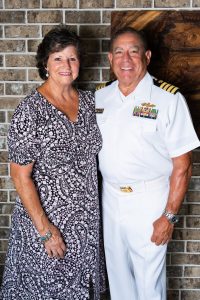
There are people who fall into a career, and then there are people who were born toward one. George Suther is the latter. The son of a Naval Aviator, George grew up moving every few years as his father changed duty stations across the country, a life that taught him early how to adapt, explore, and find something worth appreciating wherever he landed. It’s a skill that would serve him well across a 28-year Navy career of his own.
After graduating from Georgia Tech and marrying his wife Beverley, George took a job with an architectural firm in Atlanta. He might have stayed on that path, but a conversation with a colleague who served in the Naval Reserves changed the trajectory of everything. One visit to a recruiter later, he came home and told Beverley he’d made a career change. He never looked back.
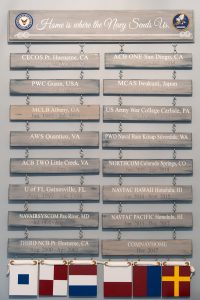
As a licensed architect, George was a natural fit for the Navy’s Civil Engineer Corps, the branch responsible for construction and maintenance across all Navy and Marine Corps installations. What followed was a career that reads like a geography lesson: Guam, Albany, Quantico, Little Creek, San Diego, Kuwait, Japan, Hawaii, Colorado Springs, and more. Fourteen duty stations across 28 years, 16 moves total. His family, including their son Neil, went with him every time.
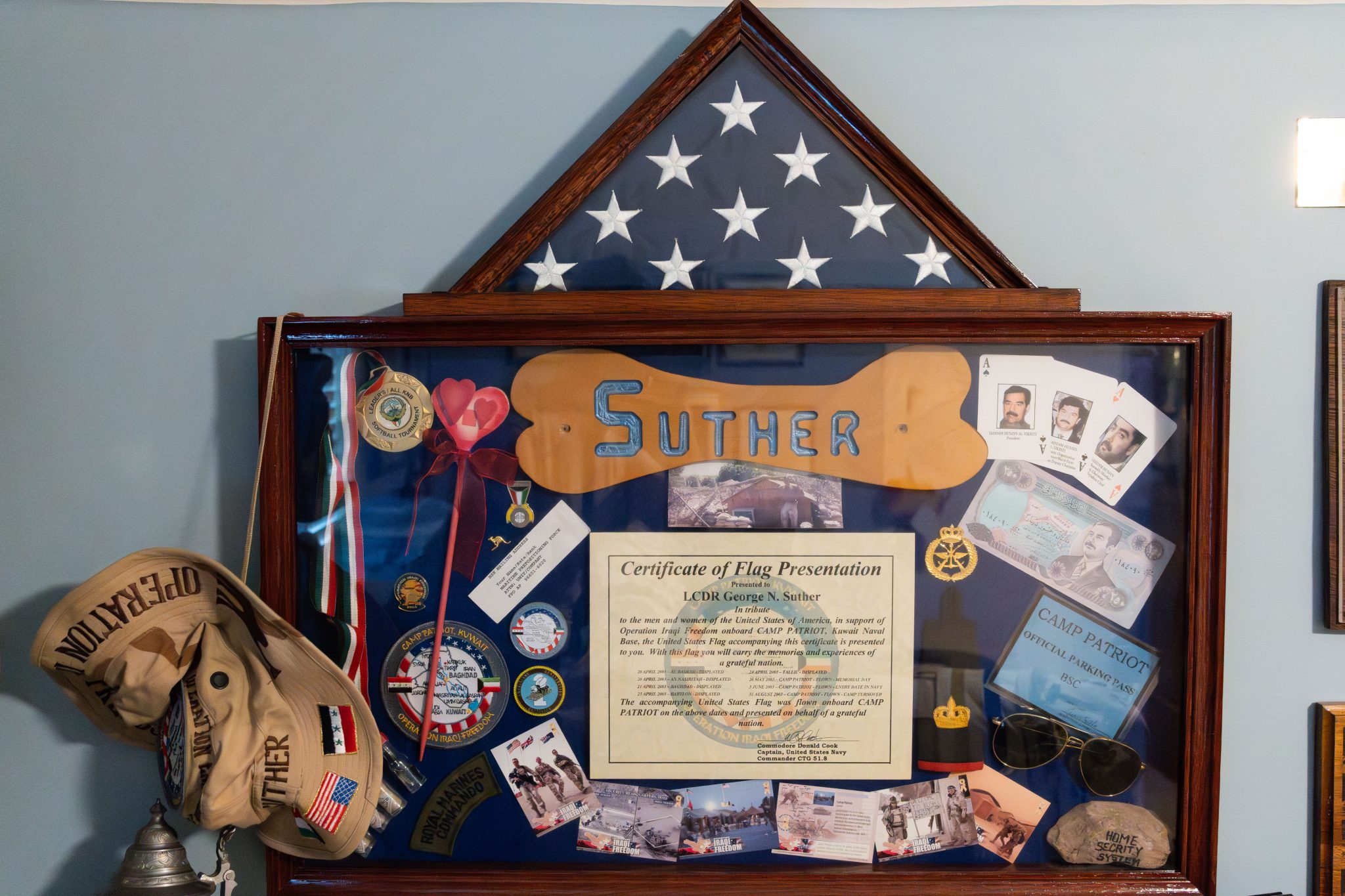
The roles were as varied as the locations. He served as a Company Commander overseeing 105 personnel. He was the first Civil Engineer Corps officer to attend the Marine Corps Amphibious Warfare School, where a young Marine Captain who later became Commandant of the Marine Corps was among those who supported his time there. He qualified as a Seabee Combat Warfare specialist. He deployed to Kuwait as Operations Officer, where his battalion constructed a 4,500-person coalition camp in support of Operation Iraqi Freedom.
Then there was the phone call at NORTHCOM during Hurricane Sandy. A routine briefing with FEMA leadership took an unexpected turn when the person on the other end of the line turned out to be President Obama. George answered the questions, ended the call, and then went to tell his boss he’d just been briefing President Obama. His boss stared at him and wanted to know one thing: had he said anything to get them all in trouble.
But of all the moments George carries from his service, one stands apart. During the 75th commemoration of the bombing of Pearl Harbor, George and Beverley had the honor of hosting the last five survivors of the USS Arizona at their home on Ford Island. He befriended Lauren Bruner, the second-to-last man to leave the ship, who placed the Suthers on a short list of civilians permitted to attend the ceremony at the Arizona Memorial. It is not the kind of thing you forget.
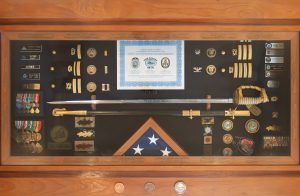
George’s retirement ceremony was held on the stern of the USS Missouri. The flag presented to him that day had flown over three ships chosen with meaning: the USS Constitution, representing a beginning; the USS Arizona, a rebirth; and the USS Missouri, where the Japanese surrender was signed, marking an end. Even the ceremony itself was a story.
These days, George and Beverley are exactly where they want to be. They first visited Savannah in 2018 while looking for a place to retire, and the city made its case quickly. When they found their home in Southbridge, that sealed it. George stays connected through the Veterans of Foreign Wars and the local Navy League, and docents at the historic Davenport House, bringing the same curiosity about place and history that his parents instilled in him decades ago.
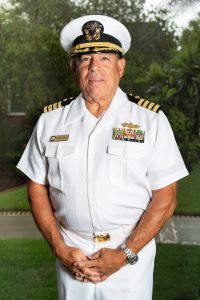
When asked what America’s 250th anniversary means to him personally George doesn’t hesitate. “It’s the resilience of our Country to maintain its strength and integrity,” he says. “Those who sacrificed more than we can imagine to create this nation and give us the ability to continue to excel. The men and women who served, are currently serving and those who will serve will continue to carry on the traditions and pride that make us the greatest/strongest military in the world and to ensure we are still a force for global good and security the next 250 years.”
For a man who spent his life in service to his country, George Suther seems genuinely at peace with where he’s landed. After 16 moves and 28 years, Southbridge turns out to be home.